You may sleep here. Under these blankets, it seems there are only nursing camels; what protrudes to be humps of transformation expand and contract like wooly lungs, the mounds of respiration. This is sacred now, because of problems with air, fear of taking a breath yet having to because the respiratory system is slow to change compared to the need for it to change.
Those who come here crave the tactile, these old pages flake upon contact with our fingers. As if we process tobacco, believe in native trades again too late.
I don't know that depending on speciation will get us here, but were we camels, we would not be who we are now; we can remember a future we make of dromedary; hope (why shouldn't a camel have a turn at being savior outside deserts?), but the future won't need to resurrect us if it plans on going somewhere better which is how we got our dromedary destiny. There are books about this, but mostly abstracts.
Perhaps you are familiar with the
universe; that is an indeterminate number of galleries in the Library of Babel; perhaps you know of it and other exquisite failures, many of which are also poetry. Failures I interject now, mindful that anything happening that is noticed is as interjection, arriving at oblique angles, able to disrupt so as to cause notice after which the event, transcribed into symbols and alphabet of memory, merges into pages of time and existence, and the infinity, always infinite continues to be infinite though now is made of more pieces so is a larger infinity though the hands involved are those of
Jorge Luis Borges, for whom I imagine an ancient beast of typewriter, paper eating-insects with mandibles carved into the shapes of the characters, especially (I am attracted to this one) the ruined smile of tilde, insects that the writer feeds by typing The Book of Sand, the insects biting the words into the paper. It is quite beautiful really (a replacement revelation for the much older one on Patmos that is so famous it no longer works for me), except perhaps for the fastening of the insects (at the thorax) to the typebars, leaving their legs free to conduct only the music of frustration and desperation, music easy for some to not hear, but that music, even if beautiful, as suffering can be in how it perfects some (many of the Patmos-committed) for salvation, establishes worthiness, is christlike and beneficial, is SOP in nonviolent protest, is a dignity of aging and degrading infinitely in some infinite systems, in some galleries of the library.
Here is some further more complex beauty: that music of captive insect frustration and desperation, that invisible sonic milk:
(milk for being of tortured necessity, as when birth occurs as rebellion against circumstance, when there are hostages of human inability to figure out what to do with variety so overwhelming in its apparent endlessness, a slap in the face of the conformity that more easily could support the bland harmony of consensus); that sonic milk is overcome by using manicure scissors that have a blunt rather bulbous tip somewhat like the tip of mouth of a bottlenose dolphin that can also be made to perform —there are books about this in the Library of Babel is inside The Book of Sand (I will try to explain as I give this
Book of Sand
to you), but nowhere in this motel-provided Gideon's Bible something entirely unacceptable to me, so the shortcomings of the Bible are obvious, and persist in translation after translation. But it reflects the knowledge of the circumstances of its writing, including point of view, and maybe, as I have, you’ve had enough history lessons. The Library of Babel inside The Book of Sand must constantly remake itself. That is the advantage of its substance, the sand is easily reconfigurable, the biblical dunes of it like unsuccessful dromedary humps shift, move (alive with insect alphabets), so all information is dynamic, and has memory so can return, only for a limited time, to a prior configuration for comparative studies and both healthy and unhealthy forms of nostalgia.
I’m sorry to have said all this without first saying hello, but I’m so eager to give you this Secret Books before it turns all to sand for another reconfiguration. And I want something of this exchange in this motel (somewhere in either forms of space, cyberspace, through a trail of IP addresses leading to, ultimately, a location [unnamed deliberately] where this would be banned, and physical space where we spiral along in the arm of galaxy whose central engine might be a supermassive black hole: a form of quantum quicksand) to appear not quite legal yet be thoroughly ethical. Hello. Take it. My hands are cupped around it as if I prevent something from flying away and in the act of prevention experience a mildly abrasive pleasure as insect wings vibrate and scrape my palms, erasing one fortune and replacing it with another, each replacement increasingly more accurate as time takes me closer to inevitability. In my hands, the words bitten into paper are insects themselves, have grown from eggs deposited in the bites when Borges typed because, and have hatched winged with an epidemic of possibilities. Nothing infects the library more, and when the sand hatches, perhaps it will be clearer that somehow the library already contains all books written and all books to be written, it is a library of all possibilities of alphabet inside The Book of Sand. Embedded in the alphabet is the possibility for all words, all sentences, all books; a matter of configuration and adjustment —that’s all. That’s why I give in this one book (translated from Borges’ Spanish by Andrew Hurley) every book. The Bible has but 66, impressive to some, but only 66. And it is bound. What I give you is unbound. Unfettered. Look at this page of it that is also an ant farm habitat in The Secret Books, a photographic translation of The Book of Sand and other Borges; writings by Sean Kernan (look quickly; I do not have permission other than necessity to give you any but a limited [what they all are in a truth this library understands] look, a limited exposure): Also look at Strawbridge
I would have cut out the words, and used them all as fruit to attach to branches of miniature trees (alternate display mode for insect collections) I would have made out of the pale beige paper backgrounds returned to pulp in a cheap blender (so that the paper would look as if I’d chewed it [my inner insects active from so much reading] to extract the juice of information, a diet of a potential for poetry present in alternate arrangements of words that chewing itself might accidentally and temporarily locate). Surely this is connection to wasps whose books are hives, whose library is a corner of my garage.
I caution you that in the infinity of the Library of Babel inside The Book of Sand, every language is encountered; pages and pages, volumes and volumes in the language of the Voynich Manuscript of which what I’ve written here is a failed translation. Some purpose (the portion that approaches an unattainable noble elevation) of metaphor has been to teach appreciation of failure, the joy of the blessed inexactitude that is translation, the little useful mutations that occur in approximation, sponsoring evolutions. Let's say that a model of this universe; is as a series of umbrellas opening inside another, stretching, elongating this universe into, what amounts to, a series of universes. Let's imagine an opener --perhaps you (why not?) --or forkergirl, if you prefer (or even if you don't --could be that forkergirl spends her time opening umbrellas) as when she imagines universes; as places to go.
The first place that I could go to alone was the
library; when I was seven and still in the city into which I was born. I thought of the building on Superior Avenue as a book itself monster book whose windows were compound eyes and whose ornate door was a mouth. It wanted to consume. As do books. Mutual consumption of reader and reading material. Don’t be deceived even by forms of books whose volume seems measurable. A certain number of pages, deceitful numbers doing their job, pitiful as it is in infinities where much numbering is cosmetic, for you may turn to any page even when pages are apparently finite —and how that finite number of pages is experienced may be infinite also. The materiality of pages seems determined, yet over time will degrade: pages will become as sand, as fodder for hourglasses, my Pretty. That too is translation. Even on presumably static pages: words that move; my ideas open them, twist them, unfold them (sometimes in a scene from The Silence of the Lambs; where I too am crime-busting entomologist) and continue unfolding what has been unfolded, the page able to accommodate eruptions of additional story-mass, extended continental ant farms where, on some of them, quicksand emerges.
This happened even with the Bible. I couldn’t keep other books out. Right in the middle of David and Goliath David and Goliath were passages about the Princess and the Goblin, the Princess and the Pea. And while the ark was afloat, there were mermaids and dolphins becoming interchangeable silhouettes in moonlight that kept writing fictions inside gospels. Glorious fictions including the most glorious: Borges’ ficciones.
What I really give you is the Book of Quicksand. I hope that in accepting it, you’ll be sucked into its endlessness where I am. The sandstorms are pure seduction. I’ve not experienced quicksand other than observing it in Tarzan movies and in books where lines of text become segments of vines easily entangled with Harold’s purple crayon line
(Harold and the Purple Crayon by Crockett Johnson;) and all other veins and arteries. A haven of blood-suckers. I spent the night once in Virginia in the sitting room of a bed and breakfast house with only books and more than fifty, it seemed, eastern blood-sucking conenoses as bibliography and footnotes. They (related to this one from amazingdata.com) came in through the compound-eyed windows that I couldn’t close. Not to mention the tantalizing scant movements of gauze curtains of lashes. You won’t drown in this quicksand except in imagination, so don’t construct a drowning scenario if you don’t want to drown, but construct it well if you do. Quicksand offers an apparent change in volume by messing with solidity, spreading out colloidal welcome mats in a warping of solidity in which the Book of Quicksand becomes a shuttle into and out of arrangements of infinities (possibilities) of the Library of Babel inside it.
Whitney's gone, but I'm still here
(hoping to take advantage of this gift)
(--maybe the world needed or wanted Whitney more --
but she is gone, and I remain to do what I can --but I can't sing as she did, certainly not at the peak of her career in the 80's and early 90's, but perhaps I'll do what I can --what more or else? I expect to fall short, human that I am without choice or argument).
(but I'm not, not that our lives should be conflated;
I would/will disappear without fanfare or even notice beyond my family & employer, maybe a few friends from neighborhoods where I've lived; a handful of doctors who may still wonder a bit exactly who I am/was).
What should I do with this extra time that is mine
--not that I really believe that I have extra time;
I don't think my time on earth has lengthened; I don't think that suddenly I have skills previously lacking, but I can see (a little) more of my son --I hope at least another 20 years though the world may be gone, and I may have entered another dimension presently (though not necessarily forever) inaccessible from here. Perhaps climate changes will make the planet inhospitable to life as humanity has known it and has come to expect it (with some religious-based differences).
Will there be enough food and and clean, fresh water?
Something that has led to me has been here since life on Earth began, so I may have descendants who will struggle to survive (along with all other lifeforms), but the easy ride (fortunately, humanity did not have to share this world with dinosaurs, but recent work suggests --pretty much confirms for me-- that birds are descendants of dinosaurs and that some of these past lizards may have been feathered --the male t-Rex may have been quite a bit more familial --caring, involved with rearing young
t-rexes, etc. He may have stayed with the nest, protecting it, decorating it, etc). He may have been one of the early gardeners.
I am not (never have been) noted for my gardening.
(image from Amazon) --I do have a piece in Colors of Nature, p. 743: Tarsenna's Defiance Garden in which I Love to Spit.
I did receive a small plot to care for long ago as part of the Moses Cleaveland school gardening program). My mother has performed more admirably with plants; she deserves an award from me (my father is no longer here to award her personally, but she believes she'll be reunited with him --and with all others who have departed
--including Whitney, Tarsenna, and the dinosaurs).
Hunger is a major problem in the world. Many are hungry without awareness from parts of the world where food seems not to be a problem, is even thrown away without anyone attempting to consume it. Parents --or rather-- my mother would tell me to think of the starving children in Africa,as if that would make me clean my plate.
The Huffington Post reports Hillary Clinton as saying this about hunger.
This morning, one billion people around the world woke up hungry and tonight, they will go to sleep hungry. This issue has not gotten the attention it deserves, and it is a personal priority of mine and of the Obama Administration to address the challenge of chronic hunger with a very high level of focus and dedication.
Hunger is not only a physical condition. It is a drain on economic development, a threat to global security, a barrier to health and education reform, and a trap for the millions of people worldwide who work from sun-up to sun-down every day to produce a harvest that often doesn't meet their needs.
Today at the World Food Prize ceremony at the State Department, I am honoring Dr. Gebisa Ejeta, who has transformed farming in many parts of the world and saved millions of lives by identifying varieties of a key African crop resistant to drought and specific types of weeds.
We have the resources to give every person in the world the tools they need to feed themselves and their children. So the question is not whether we can end hunger. It's whether we will.
The Obama Administration is committed to providing leadership in developing a new global approach to hunger. We will look to 7 guiding principles to support the creation of effective, sustainable farming systems in regions around the world where the current methods aren't working:
We will seek to increase agricultural productivity, by expanding access to quality seeds, fertilizers, irrigation tools, and the credit to purchase them and training to use them.
We will work to stimulate the private sector, by improving the storage and processing of food and improving roads and transportation so small farmers can sell the fruits of their labor at local markets.
We are committed to maintaining natural resources, so the land can be farmed well into the future. That includes helping developing communities adapt to climate change, which has had a major effect on the world's farms.
We will expand knowledge and training by supporting R&D and cultivating the next generation of plant scientists.
We will seek to increase trade so small-scale farmers can sell their crops far and wide.
We will support policy reform and good governance, because sustainable agriculture flourishes in a clear and predictable policy and regulatory environment.
We will support women and families. 70% of the world's farmers are women, but most programs that offer farmers credit and training target men. This is unfair and impractical. An effective agricultural system must have incentives for those who do the work. And it must take into account the particular needs of those whose futures will shape our world: our children.
These seven principles will guide us and help us set benchmarks to measure the impact of our efforts. We are committed to collecting data, assessing our progress, and when necessary, correcting our course.
Supporting sustainable agriculture won't be a side project of the Obama Administration. Attacking hunger at its roots will directly impact whether we meet our foreign policy goals and I invite each and every one of you to join this effort.
__________________________
However, knowledge alone has not/will not/can not save us.
Knowledge includes religion.
If hungry people know more about agriculture, that knowledge may help alleviate some of their hunger. Seeds, fertilizer, maybe even soils may be needed to improve who, where, and how food grows. What, however, will make these agricultural areas sustainable? Does this idea take into account what may be happening? say, if global warming is in progress now? Are not polar bears running out of space to live as they are accustomed to live? in the north, meeting once again the grizzlies that may be responsible for the emergence of polar bears —ancestors of polar bears? The grizzpos, and polies that result from some of these meetings, new breeds forced into existence as the earth warms to temperatures not exactly hospitable to humanity, closer to the ways to was before humanity emerged, eventually to dominate for a while.
How far north will insects travel? Will birds that currently migrate south during northern winters stay in Michigan year-round? Will we take more interest in eating what presently is not considered food? Food is not universal anyway; what's eaten in one location may not be (readily) eaten in another location --I think a bit of Bourdain, and Zimmern
We do tend to be food snobs.
And Then there's the matter of our own star, the sun that will stop shining one day, (not scheduled till long after anyone alive now is gone).
I'm very hungry, so I should get something to eat -- but what?
Some snails? escargot in French.
How about some grits? Or some frog legs?
Maybe it's just info that I crave, some definitive info --don't know where to get that. however.
I'm a litte worried too --not about limited on my time; everyone and everything that exists so far has those, but I do wonder how long any go this will last before a new cycle of existence begins, perhaps to dominate. Will there ever be (in my time here) contact with nearby universes, a way to eat from other gardens acquiring tastes for what grows there easily and in sufficient quantity to help this planet's problems with sufficient foodstuff and clean water for all!
The End Times
(maybe --I hope not, however)
perhaps now is the time to allow this blogs to become the cookbook, in part, that it can be. Maybe some food experiments could be right. Maybe real (no offense intended) top-of-the-foodchain chefs will offer some suggestions (then again, I assume much, as I must --to be a good citizen of whatever I'm a good citizen of).
It will soon be time here for dinner, and I am not prepared --How nice it would be to eat and be done with that, for all of my remaining time alive, but hunger will return like a stray animal I took in, hoping it would return, but a bit sad that it did come back, and I lack the capacity to condemn the animal (that was once invited) to a certain death (though being part of life already condemns what is a part of what we think we know).
i don't really know what is means to be here, but I'm here anyway --and I've worked hard to remain connected to this world without my having to address at all why I was not taken permanently (yet), joining my father and the billions who have already left, many in pre-biblecal times so without any planned restoration of life, no everlasting anything --we may not even be right about time which is not universal --whose time should be held as model?
No answers, no answers
here (or on any of my plates)....
Please come over: Guess Who's Coming to Dinner, The Dinner Game, Dinner for Schmucks, Dinner Rush, My Dinner with Andre, Dinner at Eight, Happy Birthday to everyone.
APPETIZER COURSE
(from an amused bouche to a policy god's ear, maybe
with some help from a thought virus: infect some minds, please
--this post is for Nargis K.):
(and would be beyond them even were I not now at an age when my celebrated, by a few, abilities [I won't name them, but some found them impressive, and one drunken, jealous, then relatively minor poet, prescription-drug-taking depressed son of a famous Ohio poet, found the one ability-related prize he coveted more than any other undeserved, and called me, for the first time in our lives, separate in just about every significant way till the call, to tell me so, and hasn't called me again] are declining, but still, at this point [early] in the decline, have momentarily landed where many of us --too many for it to be possible-- like to place our achieving selves: above average).
Though this post indeed is offshoot, in my life-practice, I configure everything as offshoot, everything as being and/or having been in a relationship, with or without consent, encountering, of course, an expected problem when/if I must arrive at a starting point preceded by nothing. An absolute beginning. The very first moment from which everything is descendent and nothing is antecedent, suggesting irregularity (that's pretty close to impossibility in a derivative model) as the root of everything, warped source of existence, source of time, source of space. Suggesting a shared mutant origin --that's really delightful! A spunky start by the stuff that's the stuff of every subsequent generation. A Moxie start. I find a comfort in first spunk that is probably also mutant since there's no other source: spunky mama produces spunky child, spunky piece-of-herself-offspring --somehow something happened. Forget any problems of first cause for a brief moment of celebration of this mutant ancestry. Listen to this:
Whatever that source state did to initialize a process of interacting descent was apparently done without partner, without outside intrusion since initially, in one scenario (as unproven as others), there was nothing other than inactive original stuff that somehow activated itself to begin this ongoing chain reaction to arrive at that previous post start (and everywhere else). What was the fuel? What was the reaction? Was it some sort of single cell that started dividing, simultaneously starting time and space? A first successful mitosis (a different kind of bang, one that implies less violence, simple birth of a[nother] universe, perhaps a link in a complex chain of dimensions and manifestations of dimension-determined realities, 1D-ND):
Or —Oh no! could it be that embedded in this is First cause veiled, and/or first cause unveiled! (an apparent chance of less deception). Because origin is problematic if I must construct something that isn't derived from something else, I'll leave it alone (just as it must have been at the start, without a relationship till something got cooking). I'll deal with most everything else, that which can be joined in progress, products of interactions. And for that reason, I can't write, much as it would have been natural to do so at the start of this millennium, attack of the veiled, meaning in my mind Attack of the 50-foot Woman as a Bride again, because of how events have unfolded into a persistent vocabulary of (relationship with) terrorism no matter what is being translated, because of my complex relationship with information , and because of Nargis lace that I find so transforming, seeing it as ultra fine dining linen that prepares a table to accept nourishment to be understood as ultimate food, Nargis lace napkins, formal gloves, bridal gown bodice, overskirt, atop linen tablecloths at the reception, a quieted foam, something Catherine, The Duchess of Cambridge, despite the Grace of ceremony, didn't have, a poetry just then emerging from under an x-acto knifeacross a pond with clusters and swarms of pressed jellyfish here and there, a complex paper lace that taught me something about veils, the side next to the face and body that the face and body mark. Face and body as a kind of, often, perfumed printing press, transformed the paper lace veil by Nargis into a kind of paper lace poetry that might be useful for President Tilghman to put on while she next speaks of universities in service to the imagination (a thinking veil of Nargis lace instead of a thinking cap). Wrapped in such a cocoon, something different is quite likely to emerge. How could something not emerge as next version, say, a Tilghman 2.0, after being encased in precision-cut cells of Nargis lace? those delicate carved bones of something too lovely to die so lives on in this as-if-bleached fossil record, the persistence tenacity of loveliness (for it may rear up even a bludgeoned head anywhere, thinking too briefly, guiltily casually of Cyclone Nargis, cyclone Daffodil of unfolding volatile petals, beautiful and remarkable from various distances, and of a death in which perhaps I should have found no beauty but did, in the death of a gannet, a beauty in death that took on a role of mercy, a role of gratitude, too late, for the gannet, a blessing, too late, of space and time that belong to a death of a gannet after a storm-force effort of trying to fly against a mighty wind.
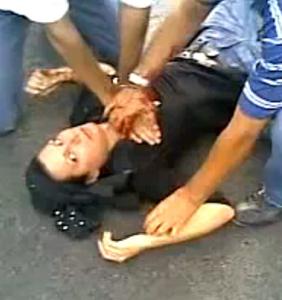
The first image of Neda is from Wikipedia [http://en.wikipedia.org/wiki/File:Neda_Agha-Soltan.jpg].
A loveliness sometimes powered within its own force, say a star's supernova finale's often superlative beauty that can resonate into solar nurseries where radiance incubates.
Nargis lace as shell, as residue, as remainder, as (momentarily) unobliterated bones resisting total erasure delivers rupture, significant cracks much more beautiful, and inspiring than what they overcome (some of that as a beauty of [successful] overcoming, as in: mythic David [the one with weight and punch; the one that matters] defeating mythic Goliath [the one that matters --recent research suggests that giant is a popular [mis]translation of nephilim: which might more properly refer to fallen ones that The Naked Archaeologist further proposes could be then extant --though in their latter days-- Neanderthals)]: an attempt to blot out and smother identity with a powerful state curtain (behind which life rehearses and prepares for forms of liberation, as is happening in Egypt, Tunisia, Yemen, Syria, Libya —and the circling of a shadow that takes shape as powerful wings of Benazir Bhutto's liberated legacy). In Nargis paper lace poetry, the inside Arabic is ruptured also, forming fragments of personal truths that rest against (or perhaps could have emanated from) nape, throat, chest, breastbone, umbilical stump as would more conventional armor, so what's left of the calligraphy, may be configured as fragments of Dead Sea scrolls or [formerly] lost Himalaya temple cave texts recently found after hundreds of years in locations where the tenacious could find them again, writing immediately recognizable as important for having survived challenging circumstances that sought its suppression or destruction, and/or for being practiced continuously in private mosques (in other cases: temples, and/or churches) of heart, body, and mind: personal power stations. Or has Nargis cut out of her namesake lace expletives that curse unnecessary, manufactured colorful gender hardships? Life seeks ways to assert itself or it ceases to be life. Each cave opening in the photo reminds me of a burqa look-out aperture where light can be both welcomed and allowed. Here is a variant of Nargis lace armor by Lalla Essaydi, as seen in Converging Territories, Essaydi's photographs of a poetry of body, from which parasites of text erupt in words for what body feels, experiences, and interprets.
Nargis lace also resembles patterns and geometry seen inside a mosque or the Taj Mahal where ceiling can function as an understanding of and mutual embrace of cosmos where symmetry and geometry become means of connection and delivery systems of beauty so intense, such beauty becomes as purpose --I can easily imagine a map of the universe's galaxies as a ceiling of a mosque, and a ceiling of a mosque as the universe.
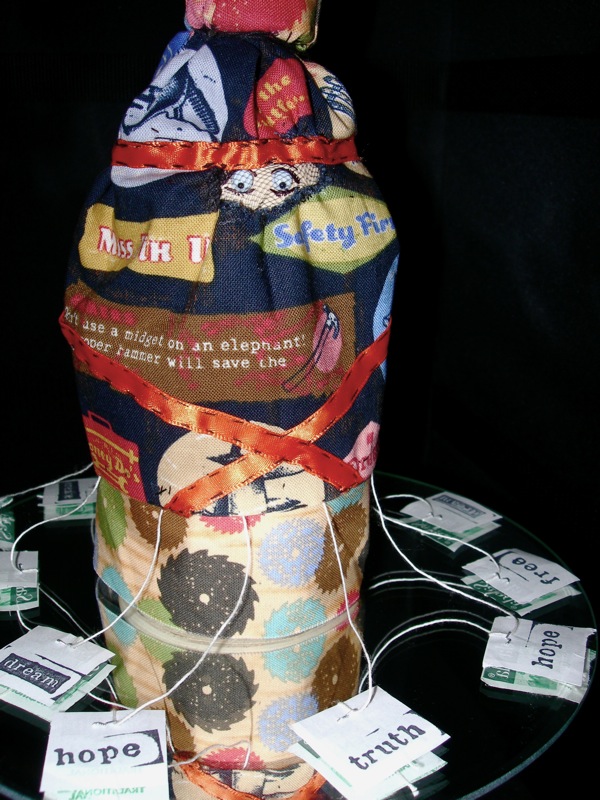
Two Nedas: My own three-dimensional and sonic poam system center pieces concerns some of what can happen when the body's investment in art-marking configures most of the boundary system of personal expression and interpretation because of external restriction. An internal poetry might be pushed into deeper and deeper interior surfaces so as to better escape detection and detection's consequences that in the case of Neda (whose name means voice), can be death of a body that cannot be completely silenced —some anger written in the brow, perhaps repeatedly, daily depending on how repressive, how inhumane the system of circumstances in that particular location at that particular moment of repression (West of Kargar Avenue [proposed by some to be renamed Neda Street] at the intersection between Khosravi and Salehi Streets, Tehran, Iran), so that it underscores itself, is an exclamation mark shaped like some of the lightning it may have been struck by-- I use metaphor unnecessarily, but my body craves metamorphosing acts, and the words build temporary beautiful structures that are shrines, sacred spaces that can accommodate human cruelty perpetrated in the name, one by one, till each serves such duty, of anything that has or acquires a name (this video may be difficult to watch):
Now to put President Tilghman in this lacy-poetry context:
Because what President Tilghman offered is far from, I've assumed, an absolute beginning, I feel more confident in thinking that what she offered was not the origin of her ideas, but that instead, her ideas were derivatives, were offshoots pruned and arranged in a particular structure of cultivated meaning, but not necessarily a structure that parts left to grow wildly or naturally without intervention would necessarily assume. Through combinations (interactions) of observation, academic exposures, genetic predispositions, sensory input ranges, local customs, parental rules, gender factors, age factors, racial factors, cultural factors, economic factors, acquired belief systems, criteria for belief system rejection, etc. President Tilghman has developed a personal database of information that is likely relied on in decision-making and that informs newly acquired information. She has, as do I, in place a system that helps her filter and categorize information, a system that also helps configure her rules of her operating system of inclusion and exclusion --the brain sort of updates its files, reshaping files, amending files, replacing files when necessary, putting them in the trash, though not necessarily emptying the trash, certainly not deleting all effects of prior belief and usefulness —-and not necessarily performing any of these tasks perfectly. So when she states that from poetry we learn the economy of words, much has happened in her experience and practice to make that statement valid within the possibly warped context of what she thinks she knows, so her statement was backed by her own confidence that has been shaped by likely imperfect collaborations of multiple systems, multiple dynamic variables. These variables have been shaped themselves through dynamic interactive collaborative processes.
Tracing one tine or branch of a variable system of poetry includes considerations of not just origins of many forms of poetry but also of written language and of spoken language and ways to transmit and receive information somewhat reliably, so that interpretations of information would be similar and could lead to sharable abstract references. Multiple moments in which spoken and written language (which includes pictures) began are in fact at the complex starting point of this post (but of course are not alone there), the partitioning or bifurcating of language into multiple genre- and discipline-related streams is another sub-branch or tine of the complex start (multiple branches that have arrived here without this post being the destination) of this content, the co-evolutions of science and art that split incompletely and continue to tangle and crisscross in emerging locations --of course, in other plottings of these branches, the splits are different; information is often configured in a manner similar to how humans have configured constellations: our references to data as opposed to actual changing of that on which perceptual templates are pinned; certainly a configuration of a universe produces that universe, a universe that is then a branching system (that can branch) of the universe (if any) that remains un-templated and available for some other configuration to be attached to it, producing yet another branching system. A Timeline of Some Forms of Poetry
on Dipity.
Each configuration happens, but it is attached to what is being configured without necessarily altering any actual substance under those configuration overlays. How to distinguish configuration overlay from what, if anything, is under it? I do not know, because an overlay system participates in configurations of reality; an overlay system is experienced. Even if an overlay system is imaginary, that overlay system could function as a real imaginary overlay system (as a real imaginary overlay, it exists in imagination, in some processing areas of brain/mind from where it can filter and help shape external realities) and contribute to configurations and interpretations of perceived realities.
Accordingly, President Tilghman's model of poetry is real, at least for her, and is out of touch with both the overlay system I associate with poetry and what that overlay is attached to directly --without disturbing the reality of her variant of poetry and its functionality within that real tight sphere. Her model of poetry (that produces poems) and the model of poetry I use (which produces poams: products of acts of making, of which Tilghman-model poems occupy a small part) are also attached, but at another more general location in the bifurcating system, before certain differentiations occur, at the broadest encompassing use (as determined and amended) of the (configurable) term poetry.
In Tilgman's model, certain forms of growth have apparently ceased (or just have not happened yet); what apparently increases is repetition and elated reinforcement of established poetic forms, and certain established poetic goals without a detectable nod toward experimental forms that actively, well, research possibilities of genre that is incredibly plastic. Perhaps for the Tilghman model there's even a miring in a common abbreviation of poetic history (she is not alone there). Her model does not share numerous poetic system differentiations that configure the interacting (on various scales, in various locations, for various durations of time) systems of poetry that I and many others use. Her model could be something like a Neanderthal branch (no offense intended to any Neanderthal descendants, no matter how distant, a super-diluted drop will do [within a further warping of homeopathic methods] --I've assumed none [but Geico cavemen, some of whom may identify as Neanderthal, though perhaps not publicly considering the term's dictionary-verified reference to an uncivilized, unintelligent person who would not be expected to define poetry as anything but a literary form specializing in the economy of words in his efforts to appear refined] will see this other than those who may not know of their Neanderthal ancestry [perhaps even myself, though even without a Neanderthal strain, my genetic identity is sufficiently complex] that may have occurred when some Neanderthals and Homo Sapiens mixed [behavior that is more natural than unnatural, I believe]);
yes, a Neanderthal branch, once vibrant, flourishing, from time to time dominant, a history of having interacted with a species of poetry once historically similar (pre-Moxie), maybe related but now sufficiently evolved to be a species of its own, a Moxie poetry species with its own evolutions and extinctions that occur more removed from the relatively slower evolutions and extinctions in the Tilghman poetry species that can of course influence and mix with the Moxie species (indeed; producing these generous helpings of Tilghman-spiced thought suppers).
And now, for your dining pleasure, TONIGHT'S dirty dish SPECIAL:
A REPRESENTATIVE OF THE MOXIE POETRY SPECIES TAKES ON A REPRESENTATIVE OF THE TILGHMAN POETRY SPECIES
Some of the magnitude of an apparent narrowness of thinking behind the Tilghman poetry model, shaping both this event and some policy outcomes of applying this thinking, is well expressed through some spontaneous poetry of astronomer, astrophysicist, and cosmologist Carl Sagan, author of Contact in which, in a film adaptation, Dr. Eleanor Arroway, from within a transit system of interconnecting wormholes, imagined configurations of theoretically predicted yet not yet observed Einstein-Rosen bridges (that essentially connect folds in space-time, by folding space-time), experiences cosmic poetry. Dr. Arroway experiences this poetry in impossibly deep (for us, at this time, outside of imagination) space celestial events, unlike anything ever before witnessed by human eyes, more impressive to her than anything so far delivered to us by Hubble, inaccessible except from these bridges, often depicted as cylindrical tunnels (or hollow branches of limited forking systems).
She, alone among humanity, is privileged to experience a visual poetry so astonishing, the scientist within the singular person that Eleanor Arroway is falters, craves a supplement to the scientific method worthy to respond to what she's witnessing. --but she doesn't really witness this alone; the actress Jodie Foster is tangled, maybe a little, maybe a lot, with the character, forming a complex singular daughter of that entanglement. There is a location where Foster/Arroway's various roles as this and that (woman, mother, daughter, actress, scientist, etc. for example) converge for her to be one human --that practices science, that believes there is a system of configurable more-than-what-confronts-humans as daily and incredibly local significance in pursuit of meaning, some pursuits judged successful even if that success can't be proven, and even if success has no further meaning. Our minds can act as microscopes enlarging our importance, assigning overblown (not to scale) meaning to what we've made that has only roles we created for it, roles whose range is statistically insignificant within our own milky way galaxy let alone any galactic cluster, let alone this partially known portion of universe where we do and think and feel all that we do and think and feel. Indeed, constellations of the zodiac are earth-tethered illusions, even casting the planet Venus as a star; the stars are not in those formations we perceive courtesy our limited perceptual depth of field when visually processing astronomical distances, compressing light years of space into a single effective plane of compatibility indexes and horoscope-determined decision-making. But in the practice of what is experienced as as a system of reality, constellations can be real. Other than those able to willingly or unwillingly function as split or multiple personalities, we function as single compound humans that feel, dream, hope, that rationalize and solve problems within fluctuating emotional, cognitive, and psychological states: one human that is an integrative entity, multifaceted; all that we are, all that we learn in separate disciplinary silos is learned by a single multifaceted person. Perhaps we need more practice in what we can assemble and reassemble with these geometries of information, more practice in assembling structures of convergence instead of practicing so much code- and discipline switching with attention to discipline loyalty that sometimes impedes growth.
The scientist aspect of Eleanor realized inadequacies of science practice isolated from all other practice of an integrative human in referring to the complex beauty she saw mapped in what was her new, more beautiful, more compelling, more complex sky; her own lexicon had no words that could convey enough magnitude of an immensity she was seeing to be useful; her own practice as everything that she was in one small person had not prepared her with a satisfactory way to respond. No formula, no Da Vinci code, no sacred text she knew had mentioned specifics of any of what she was encountering so was, temporarily anyway, useless --turns out she needed metaphor desperately, lamenting that they should have sent a poet who would likely experience similar inadequacies when confronting something completely without precedent for which no word in any human lexicon offers insights --not even the universe of ceiling in the Taj Mahal(assuming she'd seen it). —— no existing word in any human lexicon offers a way to direct someone outside of direct sensual encounter with these cosmic events to simulate comparison
--so metaphor would also fail, though recognized by Arroway as a best chance, among human inventions, including other linguistic tools, to attempt to express what was unfolding beyond what any of her training and practice in any area had been able to predict or imagine. She was unprepared. For all her knowing, all her research university training, all her science practice, she realized immediately upon entering it, that she was in a situation --her active if temporary reality-- in which she knew nothing. None of her training or experience was useful for that moment of personal inadequacy that made her proclaim: they should have sent a poet!
Her recording devices failed; none captured any specific visuals, specific sounds, smells of distant planetary landscapes --she brought back a handful of nothing but hours of static; these must be filtered through her memory and her mind that integrates information, catalogs and cross-references in complex ways, bifurcating, interconnecting paths that offer multiple triggers to (variants of) the same information, that can configure (variants of)the same information for different contexts; a mind that does not catalog information (only) according to disciplinary silos; how odd for those presenting in this event to forget that silos leak --we don't build anything so well that it functions perfectly according to our limited and sometimes misguided, even if well-intentioned within human inadequacies, specifications, some of which may be built upon erroneous assumptions that may even be supported by devices of our making that, conspiring with various forms of chauvinism, are part of the sources of those specifications.
Some of what was failing well in that scene wasn't literally poetry or science as widely accepted and/or understood; but those also failed. Our failures are exquisite, and grand for us, measured as they are against our own insignificance which also embraces our successes. Every assumption we have for a time is part of our failure, as we try to understand what may not be understandable, as we seek an immortality of spirit that is hard to believe could be extinguished the way it powers us. Our struggle is colossal and unending until we are gone, some of us to meet our maker, others to meet an opportunity to be some of the stuff of other stuff. We have built religions that have endured for thousands of years but have not existed before us and probably won't exist after us, yet through what we've made some of us believe we can be saved --such is our complexity, our folly, our fear, our resolve, our achievement, all of it grand while we are here to name it grand --And so it is, until our grand departure whose grandness we will not be able to document. It is such beautiful, futile effort, I would not want to liberate us from it.
This failure perhaps functioned largely as metaphor for a more generalized insignificance of humanity, an insignificance that perhaps suggests an importance of being even more appreciative of being the integrative humans we are, for, it will probably turn out, our one lifetime playing out, ultimately, for a finite number of generations, on this iteration of this planet, in this iteration of this solar system, in this iteration of galaxy in this iteration of universe, for us the only universe, a single all-encompassing reality, including ghosts, phantasms, angels, heavens, hells, other supernatural manifestations, all of which are tethered to us in this iteration of reality that forms what we understand as experience. The only earth, only reality systems(that we are aware of within flexible and uneven,irregular, I suspect, boundaries of this universe --even those anticipating various forms of return or persistence tend to posit that return or persistence within this universe, which makes sense because we lack, for now, access to any others) Though other outcomes may occur in other systems of realities in currently inaccessible neighboring universes and the realities they support, we experience this system, this universe in ways that confine what we experience to what is possible within this universe, so an out-of-body experience is not out of this universe, for instance. Our outcomes is linked to our planet's outcome, our galaxy's outcome, our universe's outcome. I have assumed no permanence for any of these. How spectacular! To be enjoyed, appreciated, abused, exploited, and so forth, only while it lasts.
Our monuments won't matter.
None of our prizes.
None of our corporations.
None of our hospitals, schools, penitentiaries, armies, restaurants, philosophies, wars.
None of our factories producing artificial clouds,
sky beards, disintegrating aprons, prostheses for gods, angels, ghosts
--impressive yet short-lived variation of atmosphere, perhaps the best we could do
(in any configurations of particulars of circumstance).
None of our attempts to elevate some of ourselves higher than others
yet not higher than humanity itself --we reconfigure what humanity is, distort, warp, alter
without enlarging our role in the universe.
Our hold on earth hasn't been since the start of earth and, barring some cataclysmic episode or epidemic,
(probably) won't endure to the end of earth.
An honor or privilege of having existed will have to have been something felt, experienced, not measured by our social ladders to insignificance which does reveal something about our range: we matter to only ourselves; our human accomplishments extend no further than our tiny planet from which our ideas and satellites of our ideas try to extend themselves, via proxy mechanical ambassadors of our vitality and ability to love, ability to try to connect with what many of us hope, and many of us believe is beyond earth's atmosphere that we must take with us by the tankful in order to exercise this vitality and ability to love elsewhere, wrapped in visions of life and life's associated meanings larger than ourselves, as big as all forms of God interacting in a vital pulse of secrets of substance, secrets of origin, secrets of light, so many patterns on every scale, in any location, for varying durations of time --acting as center of a universe without center, so big, any location seems to work as center (though the geometry of this universe is likely to be more complex, irregular, even if what is observable seems more ideally symmetrical), any location can be that point from which lines (of all sorts) may be drawn to everything else—— how extraordinary; how pure, essence of generalized godlike gist, not necessarily a proper being at all, but amalgamation of everything, sum and root of everything, including other universes put together: what is found in an endless zooming in, endless zooming out, a heaven of feeling that we belong to this zoom, to be recycled as more zoom until something else happens perhaps as impossible to understand as a definitive moment of origin when a metaphorical gun fired into only darkness, the firing only audible and visible when it happened. Before that, maybe there was no gun.
And we were not the purpose for the experimental poetry of existence. Existence did not have to know we were coming through what happened supported our emergence;
Why? would existence have been dissatisfied with rings of Saturn, with Jupiter's red gas stormy eye,
with the milky way's arms and their earthly Hindu echo in the universes of Shiva
and therefore needed us as refinement or improvement of what had come before us, paving the way for us
--of course: red carpet treatment from the start. We do know how to dream; our brains require it.
We are an outcome of a particular set of interactions, without necesarily being a planned temporary destination; we've joined an ongoing existence; this experimental poam of being continues, with us as just subset of so much that is marvelous, and temporary, words lose meaning and necessity —there is no economy in the wonders that have emerge and will continue to emerge in existence. Wonder emerges as the default manifestation of existence> which is on its way to forms and configurations to which we may at best be donors of substance as the wonder poam of existence becomes and becomes and becomes until becoming cannot continue in configurations I can (ever) speak of. Perhaps it this godlike essence that banged, dispersed, seeded universes, giving itself to worlds that grow into potentials that after many millennia of growth recombine, the density of everything tightly connected compressing everything into an undetectable existence that one day pops open, cracks from its own pressure as the density of everything connected continues to be compressed to the limit of compression.
What passes through us is marvelous. What we hold and influence is marvelous. Surely so will our debris, our residue be marvelous and unnamed, and used in the unfolding of poam that everything in it writes, rewrites. In an temporariness that astonishes me, and makes me love being here with my compromised vision, one-eye only, moxie cyclops, hair turning as white and uncontrollable as a comet's Rapunzeled tail; I've been given sights, sounds, textures, ideas that together form a heaven of being that will enter a paradise of oblivion, maybe a slow fade and dissipation of materiality and energy perturbed in the slightest way for having been embodied as me influencing in the slightest way some tiny fraction of a fraction whatever takes on bits of moxie supper residue.
Asystem of universe, it would seem, is not singing accolades to our meager discoveries that have yet to discover that we may compile only long-term (from a human perspective) meaninglessness, may document only assumptions that would breakdown in increasingly larger (or increasingly smaller) contexts; that a ranking of science above art may have no validity outside of those deeming it superior, those who despite deeming it so cannot prove superiority; human hierarchies are for humans alone, to order human assessments and pad our feeble importance which is no less praiseworthy for being feeble, tenuous, like so much else that exists. Whether science or art or crime ior atrocity, the outcome is human outcome and tethered to comprehensive considerations of humanity. Dr. Arroway could not in a moment of confrontation with cosmic art, with some of the art-making practice of systems at work in unfolding this universe in the ways it unfolds, mechanisms mostly unknown to humanity that is limited to findings that are discoverable by increasingly sophisticated though still fallible tools used in inquiry, remembering, as we think we know, that all that is visible is not visible to unassisted or assisted human vision (for it's not known irrevocably that assisted vision yet exists in all possible forms of assistance), that all that vibrates and is sound-producing does not produce sound audible to unassisted or assisted human hearing (for it's not known irrevocably that assisted hearing yet exists in all possible forms of assistance), etc. A system of universe is not regarding us as supreme or as anything special whether we are biochemists or bums --existing at all is special
--while it lasts; we nor our diamonds last forever (though our diamonds can outlast us), and it isn't clear what if anything does last forever, nor in what forms --not even the form of an everlasting soul (of the universe or of anything, this particle inherited from the moment of origin, the revving up of the existence machinery --the particle, the substance, the something not yet identified that everything that exists inherited (call it big bang debris or residue) in order to exist.
Humanity may be superseded by forms beyond our present ability to imagine. Even if we have inherited the earth and have acquired dominion over both organic and inorganic planetary resources, we cannot claim permanent occupation of the planet; there was earth before us, and the planetary record and other cosmic records as we have determined them suggest that there will be earth after us; we are not the evolutionary destination, not the culmination of cosmic forces, not the goal of existence, just part of it, active in these limited moments of human activity; now it's our turn, then willingly or unwillingly, we recede and something else temporarily rises.
This Carl Sagan realized, much more eloquently, as a pale blue dot, much more poetically than what I failed (in nearly 6,000 words) in saying, knowing I would fail, so said it, agreeing that the scientist this time is a better poet:
The text of what Carl Sagan said about the pale blue dot photograph of planet Earth taken in 1990 by Voyager 1 from a record distance, showing it against the vastness of space. By request of Carl Sagan, NASA commanded the Voyager 1 spacecraft, having completed its primary mission and now leaving the Solar System, to turn its camera around and to take a photograph of Earth across a great expanse of space:
From this distant vantage point, the Earth might not seem of any particular interest. But for us, it's different. Look again at that dot. That's here, that's home, that's us. On it everyone you love, everyone you know, everyone you ever heard of, every human being who ever was, lived out their lives. The aggregate of our joy and suffering, thousands of confident religions, ideologies, and economic doctrines, every hunter and forager, every hero and coward, every creator and destroyer of civilization, every king and peasant, every young couple in love, every mother and father, hopeful child, inventor and explorer, every teacher of morals, every corrupt politician, every "superstar," every "supreme leader," every saint and sinner in the history of our species lived there – on a mote of dust suspended in a sunbeam.
The Earth is a very small stage in a vast cosmic arena. Think of the rivers of blood spilled by all those generals and emperors so that, in glory and triumph, they could become the momentary masters of a fraction of a dot. Think of the endless cruelties visited by the inhabitants of one corner of this pixel on the scarcely distinguishable inhabitants of some other corner, how frequent their misunderstandings, how eager they are to kill one another, how fervent their hatreds.
Our posturings, our imagined self-importance, the delusion that we have some privileged position in the Universe, are challenged by this point of pale light. Our planet is a lonely speck in the great enveloping cosmic dark. In our obscurity, in all this vastness, there is no hint that help will come from elsewhere to save us from ourselves.
The Earth is the only world known so far to harbor life. There is nowhere else, at least in the near future, to which our species could migrate. Visit, yes. Settle, not yet. Like it or not, for the moment the Earth is where we make our stand.
It has been said that astronomy is a humbling and character-building experience. There is perhaps no better demonstration of the folly of human conceits than this distant image of our tiny world. To me, it underscores our responsibility to deal more kindly with one another, and to preserve and cherish the pale blue dot, the only home we've ever known.


 Though this post indeed is offshoot, in my life-practice, I configure everything as offshoot, everything as being and/or having been in a relationship, with or without consent, encountering, of course, an expected problem when/if I must arrive at a starting point preceded by nothing. An absolute beginning. The very first moment from which everything is descendent and nothing is antecedent, suggesting irregularity (that's pretty close to impossibility in a derivative model) as the root of everything, warped source of existence, source of time, source of space. Suggesting a shared mutant origin --that's really delightful! A spunky start by the stuff that's the stuff of every subsequent generation. A Moxie start. I find a comfort in first spunk that is probably also mutant since there's no other source: spunky mama produces spunky child, spunky piece-of-herself-offspring --somehow something happened. Forget any problems of
 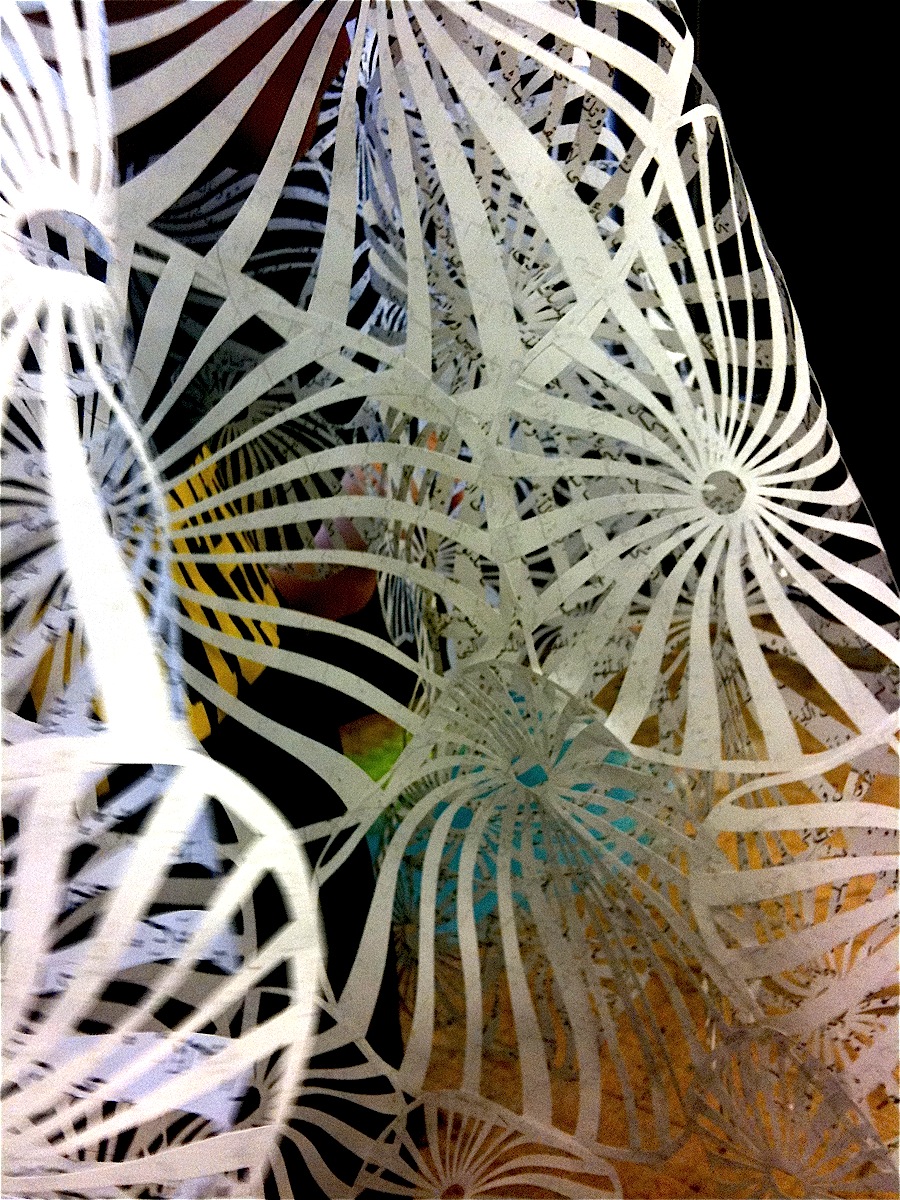 , and because of Nargis lace that I find so transforming, seeing it as ultra fine dining linen that prepares a table to accept nourishment to be understood as ultimate food,
 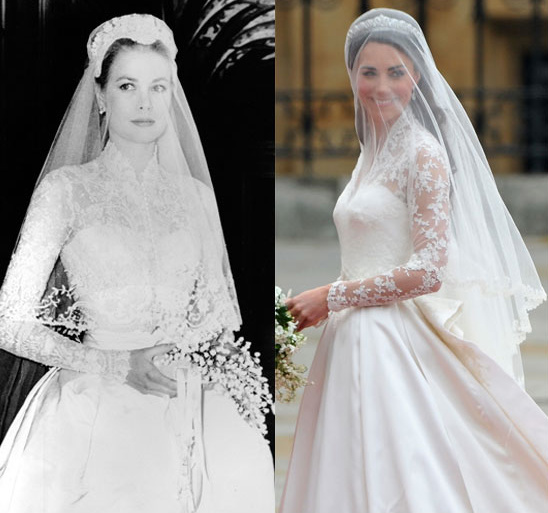 Nargis lace napkins, formal gloves, bridal gown bodice, overskirt, atop linen tablecloths at the reception, a quieted foam, something
 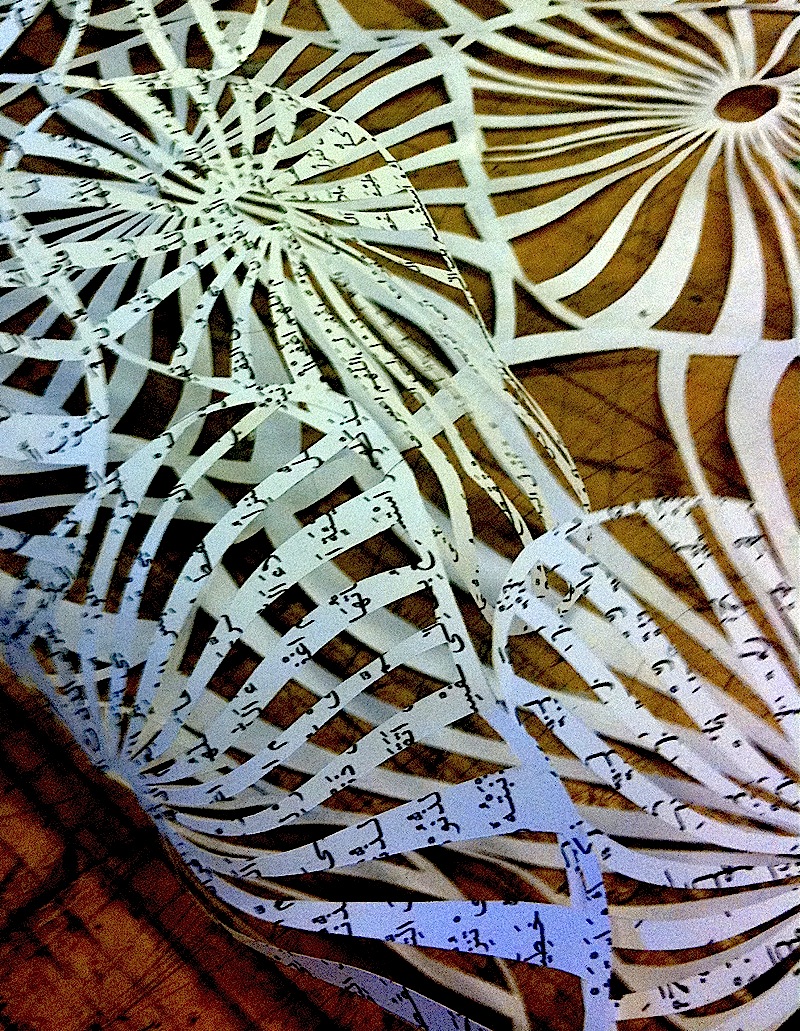 across a pond with clusters and swarms of pressed jellyfish here and there, a complex paper lace that taught me something about veils, the side next to the face and body that the face and body mark. Face and body as a kind of, often, perfumed printing press, transformed the paper lace veil by Nargis into a kind of paper lace poetry that might be useful for President Tilghman to put on while she next speaks of universities in service to the imagination (a thinking veil of Nargis lace instead of a thinking cap). Wrapped in such a cocoon, something different is quite likely to emerge. How could something not emerge as next version, say, a Tilghman 2.0, after being encased in precision-cut cells of Nargis lace? those delicate carved bones of something too lovely to die so lives on in this as-if-bleached fossil record, the
  within its own force, say a star's supernova finale's often superlative beauty that can resonate into solar nurseries where radiance incubates.
  so what's left of the calligraphy, may be configured as fragments of Dead Sea scrolls or [formerly] lost
  Or has Nargis cut out of her namesake lace expletives that curse unnecessary, manufactured colorful gender hardships? Life seeks ways to assert itself or it ceases to be life. Each cave opening in the photo reminds me of a burqa look-out aperture where light can be both welcomed and allowed. Here is a variant of Nargis lace armor by Lalla Essaydi, as seen in
  Nargis lace also resembles patterns and geometry seen inside a mosque or the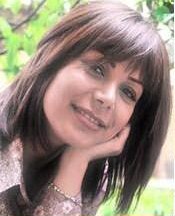
 My own three-dimensional and sonic poam system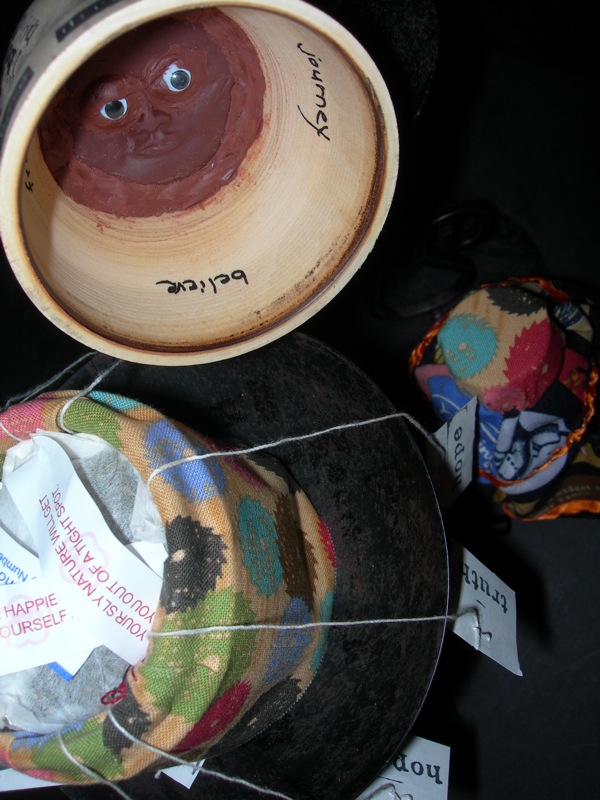
 that in the case of
 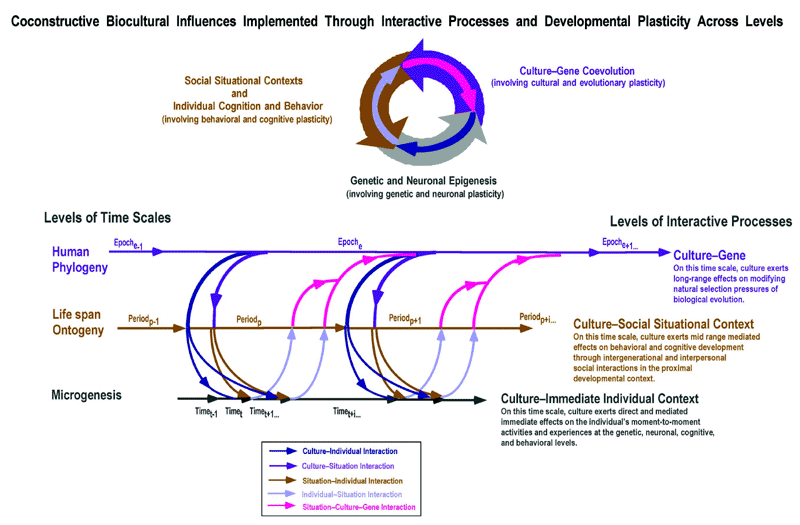 --the brain sort of updates its files, reshaping files, amending files, replacing files when necessary, putting them in the trash, though not necessarily emptying the trash, certainly not deleting all effects of prior belief and usefulness —-and not necessarily performing any of these tasks perfectly. So when she states that from poetry we learn the economy of words, much has happened in her experience and practice to make that statement valid within the possibly warped context of what she thinks she knows, so her statement was backed by her own confidence that has been shaped by likely imperfect collaborations of multiple systems, multiple dynamic variables. These variables have been shaped themselves through dynamic interactive collaborative processes.
  Tracing one tine or branch of
  Her model could be something like a Neanderthal branch (no offense intended to any Neanderthal descendants, no matter how distant, a super-diluted drop will do [within a further warping of
 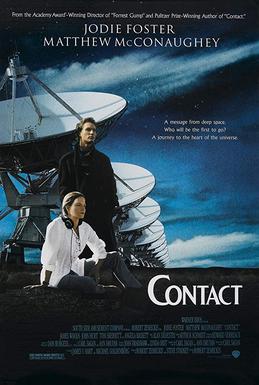 Some of the magnitude of an apparent narrowness of thinking behind the Tilghman poetry model, shaping both this event and some policy outcomes of applying this thinking, is well expressed through some spontaneous poetry of astronomer, astrophysicist, and cosmologist
  author of
 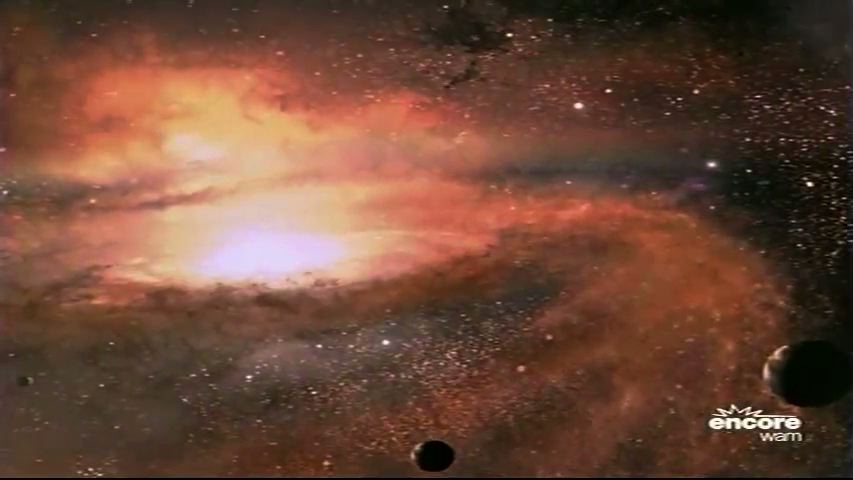 visual poetry so astonishing, the scientist within the singular person that Eleanor Arroway is falters, craves a supplement to the scientific method worthy to respond to what she's witnessing. --but she doesn't really witness this alone; the actress Jodie Foster is tangled, maybe a little, maybe a lot, with the character, forming a complex singular daughter of that entanglement. There is a location where Foster/Arroway's various roles as this and that (woman, mother, daughter, actress, scientist, etc. for example) converge for her to be one human --that practices science, that believes there is a system of configurable more-than-what-confronts-humans as daily and incredibly local significance in pursuit of meaning, some pursuits judged successful even if that success can't be proven, and even if success has no further meaning. Our minds can act as microscopes enlarging our importance, assigning overblown (not to scale) meaning to what we've made that has only roles we created for it, roles whose range is statistically insignificant within our own milky way galaxy let alone any galactic cluster, let alone this partially known portion of universe where we do and think and feel all that we do and think and feel. Indeed, constellations of the zodiac are earth-tethered illusions, even casting the planet Venus as a star; the stars are not in those formations we perceive courtesy our limited perceptual depth of field when visually processing astronomical distances, compressing light years of space into a single effective plane of compatibility indexes and horoscope-determined decision-making. But in the practice of what is experienced as as a system of reality, constellations can be real. Other than those able to willingly or unwillingly function as split or multiple personalities, we function as single compound humans that feel, dream, hope, that rationalize and solve problems within fluctuating emotional, cognitive, and psychological states: one human that is an integrative entity, multifaceted; all that we are, all that we learn in separate disciplinary silos is learned by a single multifaceted person. Perhaps we need more practice in what we can assemble and reassemble with these geometries of information, more practice in assembling structures of convergence instead of practicing so much code- and discipline switching with attention to discipline loyalty that sometimes impedes growth.

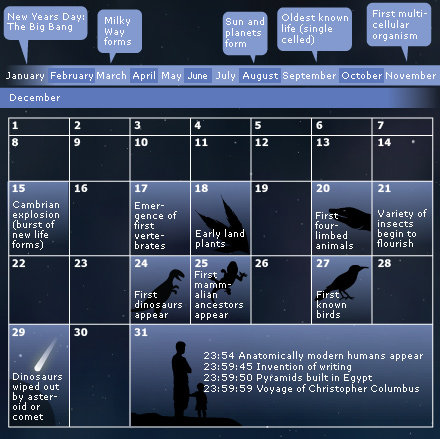 Dr. Arroway could not in a moment of confrontation with cosmic art, with some of the art-making practice of systems at work in unfolding this universe in the ways it unfolds, mechanisms mostly unknown to humanity that is limited to findings that are discoverable by increasingly sophisticated though still fallible tools used in inquiry, remembering, as we think we know, that all that is visible is not visible to unassisted or assisted human vision (for it's not known irrevocably that assisted vision yet exists in all possible forms of assistance), that all that vibrates and is sound-producing does not produce sound audible to unassisted or assisted human hearing (for it's not known irrevocably that assisted hearing yet exists in all possible forms of assistance), etc. A system of universe is not regarding us as supreme or as anything special whether we are biochemists or bums --existing at all is special
 The text of what
